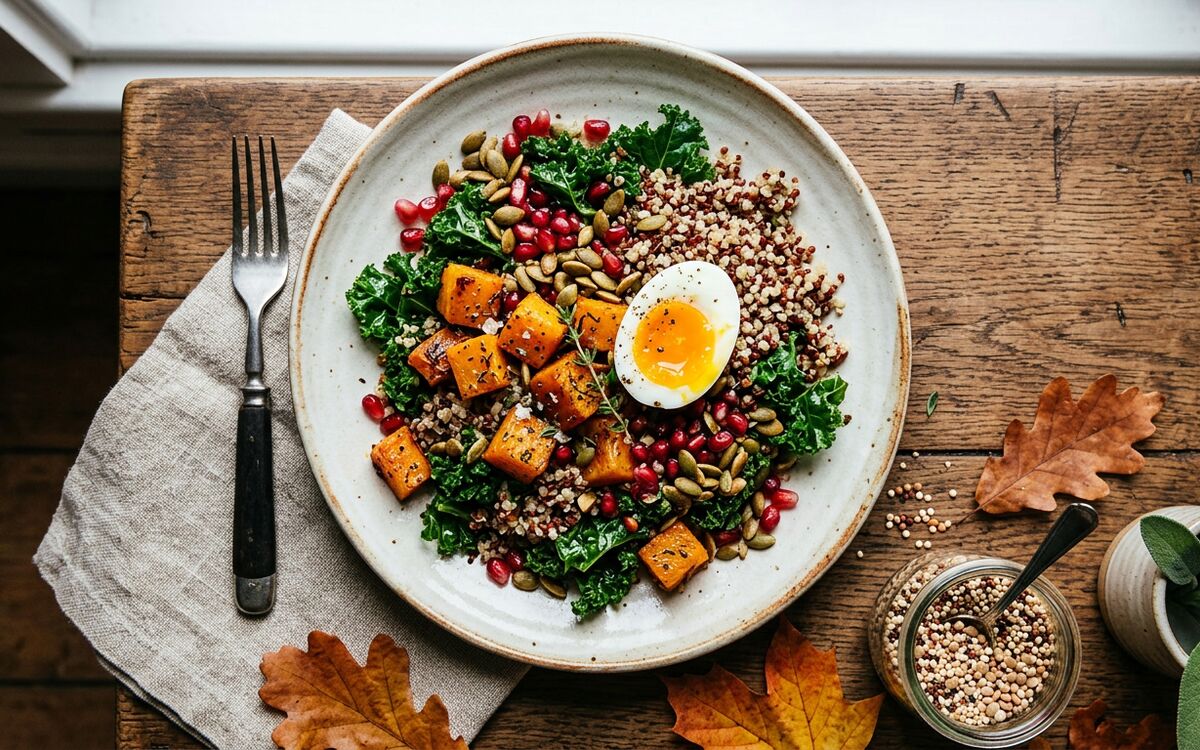
“I just need more energy” is the request I hear most often, and it is almost never solved by a new superfood. It is solved by pairing, timing and repetition — the unglamorous trinity of eating well.
Why the slump arrives on time
A lunch of refined carbohydrate alone — white toast, a jam sandwich, a latte that counts as a snack — digests quickly. Blood glucose rises, insulin follows, and a couple of hours later you are hungrier, foggier and more irritable than if you had eaten nothing. Add a short night and a sedentary afternoon, and the crash is practically scheduled.
The fix is not less food. It is food with a skeleton: protein, fat, fibre and colour together, at a predictable interval. That combination slows gastric emptying, blunts the spike, and keeps the hunger hormones quiet long enough for you to reach your own dinner.
“If your energy collapses like a cliff, look at the shape of your lunch before you look at how much you slept.”
The autumn plate, in one glance
- Half the plate: vegetables and fruit. Roast whatever is cheap — squash, carrots, cabbage, beets, onions. Frozen counts, and often beats fresh on nutrients.
- A quarter: protein you actually enjoy. Eggs, tinned fish, chicken, lentils, beans, tofu, yoghurt, leftover meat. Aim for a palm-sized portion at both main meals.
- A quarter: slow carbohydrate. Wholegrain rice, barley, oats, sweet potato, rye bread, pasta cooled and reheated.
- A thumb of fat. Olive oil, nuts, seeds, avocado, nut butter — this is what makes the meal satisfying rather than merely correct.
- Something fermented or green. Sauerkraut, kefir, plain yoghurt, a handful of leaves. Boring, cheap, and the fibre that gut bacteria were waiting for.
What our dietitians keep in the cupboard
Autumn is the easiest season to eat well, because the staples are humble and last all month.
The short list
- Red lentils and chickpeas — cook in minutes, thicken any soup
- Porridge oats, also for overnight bircher and savory oat bowls
- Wholegrain or rye bread you can freeze in slices
- Tinned sardines, salmon and tomatoes
- Pumpkin, sunflower and flax seeds for texture and omega fats
- A hard squash, cabbage and a bag of frozen spinach
- Olive oil, vinegar, mustard, garlic, chilli, cumin and cinnamon
Breakfast: keep it unremarkable
You do not need a elaborate breakfast, you need one that does not need thought on a bad day. Two templates outperform almost everything else in our clinic surveys:
- Savoury. Eggs or tofu scramble, frozen greens thrown in, bread, an apple on the side.
- Sweet-ish. Oats soaked overnight with yoghurt, chia or flax, cinnamon, and whatever fruit is softening on the counter.
Both take minutes, both survive being eaten cold standing up, and both are built on the protein-plus-fibre-plus-fat logic above. Skip the fruit-only start; it is a dessert with a health label.
Fluids, caffeine and the autumn appetite
Colder months quietly change hunger: people eat more and drink less, because thirst feels less urgent. Tea, hot water with lemon and soup all count. Keep caffeine before mid-afternoon — its long half-life is why an afternoon coffee is still working at bedtime, which is where tomorrow's low energy actually begins.
If alcohol fills the evening, energy usually pays for it the next day in both senses. Two alcohol-free nights a week is the highest-yield change most patients are willing to make.
A week that survives contact with real life
- Cook once, eat three ways: a big tray of roast vegetables becomes lunch bowls, a grain salad and the base of a soup.
- Build one backup meal you can make in a quarter of an hour with pantry items only.
- Never start a day empty-handed: carry nuts, fruit or a boiled egg so the three o'clock decision is not made hungry.
- Eat at a table, away from a screen, at least once a day. Slower eating registers as more satisfying — this is measured, not spiritual.
And if a week goes sideways, resume with the next meal rather than the next month. Consistency is the average of good decisions and repaired bad ones.
When tiredness is more than diet
Persistent exhaustion deserves a proper look, not another supplement. We will usually check blood count and ferritin, thyroid, vitamin and mineral status, glucose, and sleep quality — and ask about mood, because low mood masquerades as low energy more often than any deficiency does. Book a review if fatigue has lasted a month, comes with breathlessness or chest pain, follows fainting, or is accompanied by unintentional weight loss.